
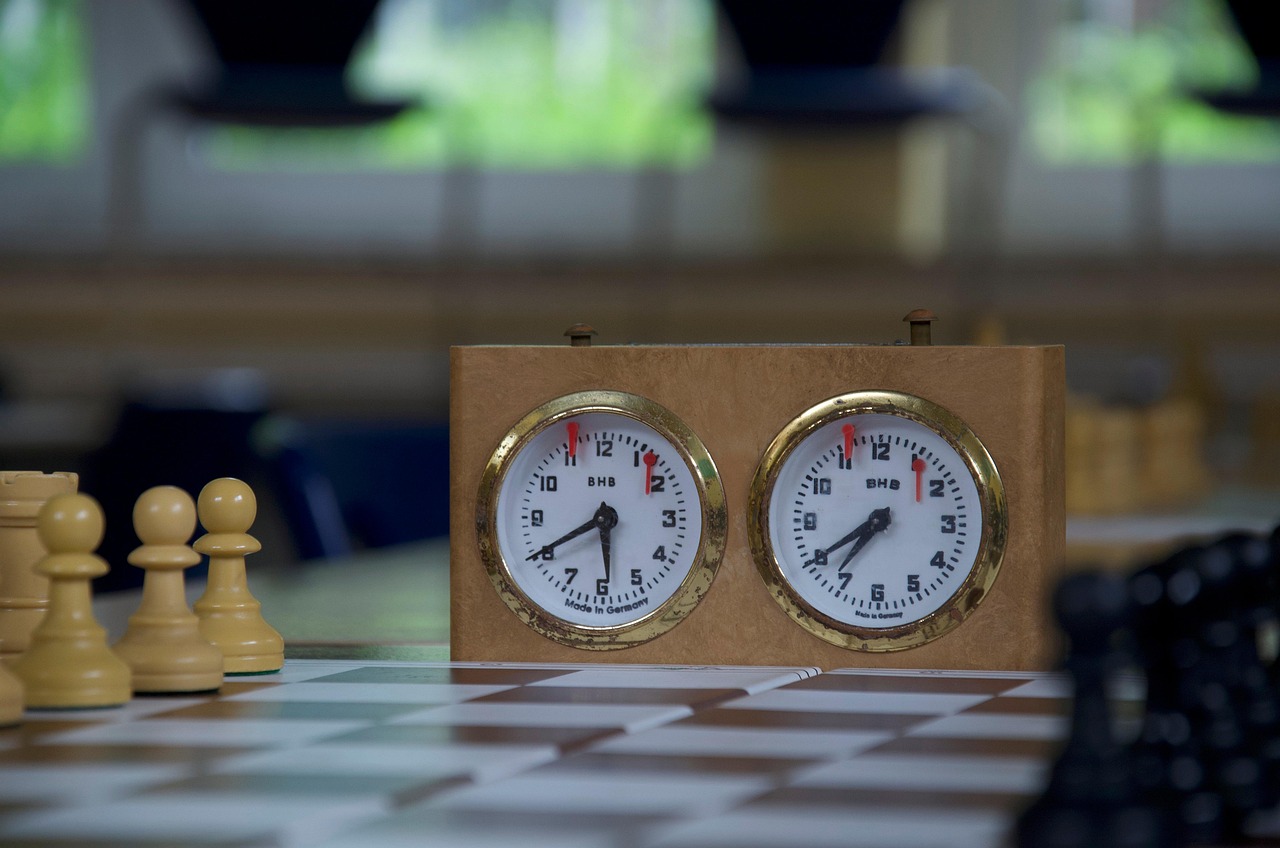
There’s a moment in every game where the position is still fine but your clock isn’t. That’s the moment where chess stops being about calculation and starts being about who you are when you feel rushed.
I hate that moment.
I was White. Equal position. Nothing hanging. No tricks on the board. My clock said 1:38. His said 6:12. I remember the numbers because I checked them too many times, which probably explains how I ended up there.
I do this thing where I tap the clock harder when I’m stressed, like it might notice and reward me with extra seconds. I also look at it after every move, even when there’s no reason to. Especially when there’s no reason to.
The position didn’t collapse all at once. It sort of thinned out. One rushed move. Then another. Then I played a move I’d already rejected ten minutes earlier, because suddenly ten minutes felt like a memory from another life.
I lost on move 34. Not because the position was lost, but because I was.
On the bus home I tried to turn it into a theory problem. If I’d played faster on move 12. If I’d trusted my first instinct on move 19. If I hadn’t gone into that line at all. The usual stuff. None of it helped.
What actually bothered me was realising that my time trouble games all look the same. Same posture. Same checking the clock every three seconds. Same tiny panic spiral that feels invisible but isn’t.
Some kids get faster when the clock gets low. They simplify. They play normal moves. They look bored, which I hate.
I get busy. I start calculating things that don’t matter. I invent problems. I treat every move like it needs to be perfect, which is ironic because that’s when it gets worst.
In Swiss tournaments this matters more than I like to admit. One silly loss doesn’t just cost you a point. It drops you into a different group next round. Different boards. Different players. Sometimes someone much calmer than you who has no problem taking your last thirty seconds and using all of theirs.
I’ve started noticing small habits that make it worse.
I calculate until I’m tired instead of until I’m sure.
I change my mind after I’ve already decided.
I rush endgames I actually understand.
So I’m trying a few rules. They’re not clever. They’re just there to stop me from doing my usual nonsense.
If I’ve spent more than a minute and nothing concrete is appearing, I play the safest move I can explain out loud.
If I catch myself checking the clock twice in a row, I force myself to look only at the board for the next move.
If the position is equal and I’m low on time, I stop hunting and start trading.
It doesn’t make me a good blitz player. It just makes me less embarrassing.
I still lost the next round too, by the way. Different reason. Longer game. Better opponent. That one didn’t sting as much.
The clock isn’t just time. It’s pressure with numbers on it. And pressure doesn’t make you someone else. It just turns the volume up.
Unfortunately, this is what I sound like when the volume goes up.