
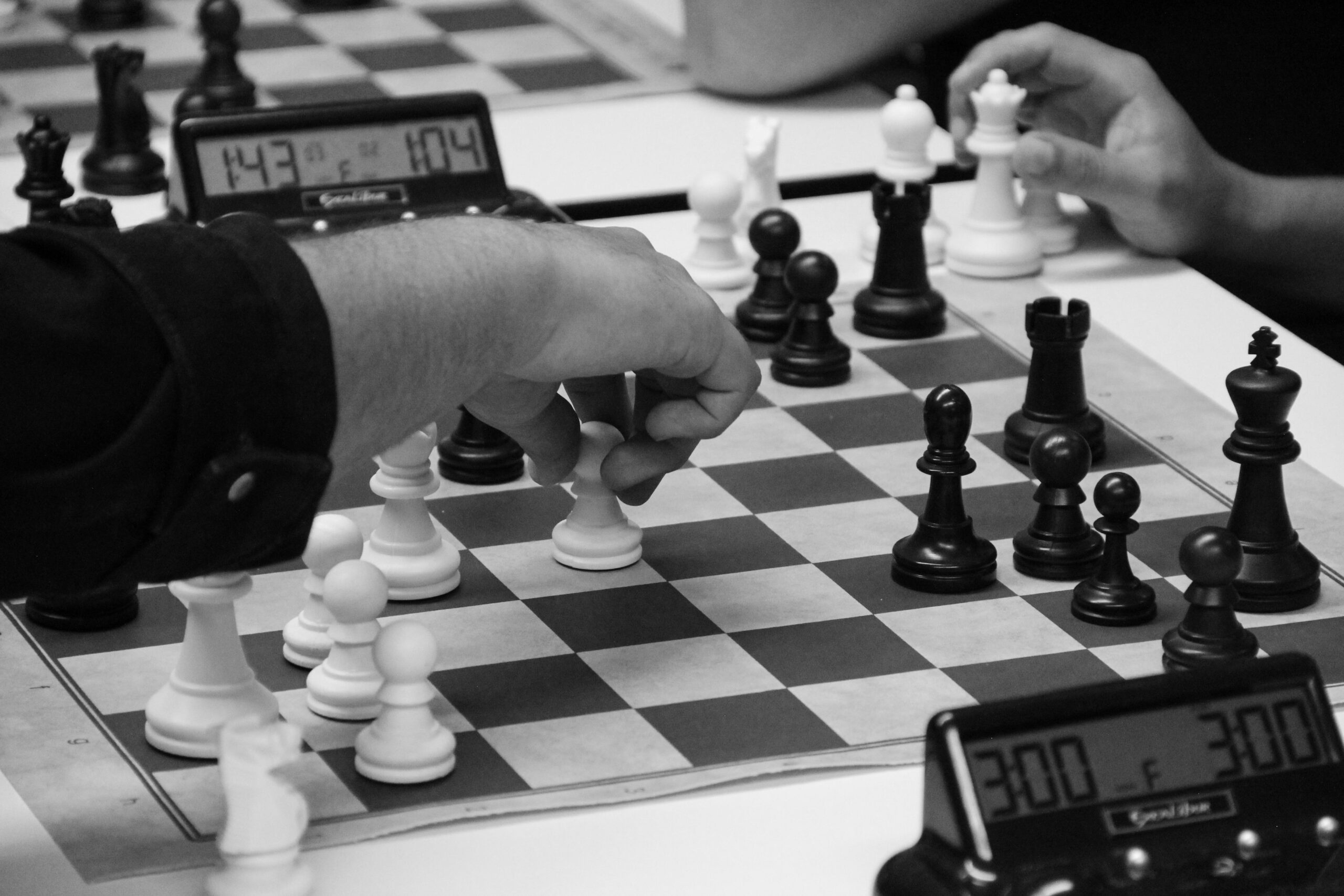
He had his hand out when I reached the board.
Not for the usual handshake. This one stayed there too long.
“Draw?” he said.
I looked at him. Then at the pieces. They were still in their starting positions.
I hadn’t taken my coat off.
For a second I thought I had misheard him. The room was loud, chairs scraping, clocks beeping and someone near the entrance explaining to an organiser that traffic should count as a valid reason for arriving twenty minutes late.
“Sorry?”
“A draw,” he said. “We both get half.”
He said it like he was offering me part of a sandwich.
I checked the pairing sheet again. I was White. He was called Iván and we were both on two points from three rounds. I didn’t know him. I had seen him playing near the top boards earlier but that means nothing in a Swiss tournament. By round four, everyone has been near the top boards at least once or has walked past them slowly enough to look as if they belong there.
“Why?” I asked.
He shrugged. “Good for both of us.”
This was not an answer.
I sat down and put my bag under the chair. Iván kept watching me as if I was taking too long to accept a perfectly normal business arrangement.
I knew players agreed draws. I had seen it happen. Sometimes the position was dead. Sometimes both players were exhausted. Sometimes the last round standings meant half a point was enough for each of them to win something.
This was none of those situations.
We had no position.
The arbiter announced the start of the round. I played 1.e4 and pressed the clock.
Iván sighed.
It was the sort of sigh people make when a waiter tells them the kitchen is closed.
He played c5. Sicilian. Of course.
After his move he looked at me again.
“The draw is still there,” he said.
I tried to remember the actual rule. Don Emilio had explained it once after a man offered him a draw every four moves until Don Emilio told him the next offer would cost him a bishop.
A proper draw offer is made after you play your move and before you press the clock. Your opponent can accept it, reject it or ignore it. If they make a move, the offer is gone.
You are not supposed to keep asking because you are bored.
I played Nf3.
Iván shook his head and wrote something on his scoresheet.
“What did you write?” I asked.
“The offer.”
There is a little symbol for a draw offer. It is basically an equals sign. This felt unfair because nothing about our situation was equal. He had confidence, a clean scoresheet and a bottle of water with one of those expensive metal lids. I had a leaking pen and no idea what he wanted.
We kept playing.
By move ten, I had a normal position. Not a good one. Not a bad one. The sort of position where both players can spend twenty minutes pretending to calculate something important.
Iván played quickly. He kept getting up after his moves and looking at the other boards.
That was when I began to understand.
Board three had two players on three points. Board four had another. Iván wasn’t trying to draw with me because our position was equal. He was watching the standings happen around us.
Half a point would take him to two and a half. Depending on the other results and his tiebreaks, that might be enough to keep him near the prizes. Losing would drop him into the group where people start packing their bags before the final round.
He had not offered me a draw.
He had offered himself safety.
The problem was that I started thinking about my own half point.
Two and a half from four sounded respectable. Better than two. Better than losing after refusing a draw that had been available before I even sat down.
This is how a draw offer changes a position without changing any pieces.
You stop asking what the best move is.
You start asking how stupid you will feel if you lose.
On move fifteen, Iván left a pawn undefended. I saw it immediately. At least I thought I did. The pawn was on d5. I could take it with my knight but then his queen might come to a5 and there was something unpleasant on c3.
I stared at it for seven minutes.
Iván came back from walking around the room and sat down.
“You can still take the draw,” he said.
I looked towards the arbiter. Iván noticed.
“I’m only reminding you.”
“I remember.”
He smiled. Not kindly. Not horribly either. It was worse than both. It was the smile of someone who thought he had already worked me out.
I took the pawn.
He played Qa5.
I had missed the pin.
For the next five moves I was sure I had ruined everything. My knight couldn’t move. My king was still in the centre and Iván had started playing quickly again. He looked happier now. The draw offer had disappeared because he thought he was winning.
That annoyed me more than the original offer.
I found a way to block the check with my queen. Then I castled. The knight escaped two moves later and somehow I was still a pawn up.
Iván stopped walking around.
We reached an endgame with rooks and opposite-coloured bishops. I had the extra pawn but his rook was active. Don Emilio says active rooks are worth more than extra pawns, especially when the person with the extra pawn has no idea what to do with it.
That person was me.
Iván offered a draw again on move thirty-four.
This time it was a real offer. He played his move, said “draw?” and pressed his clock.
I looked at the board.
I could probably keep playing. I might even be better. There was no obvious win and we both had about twelve minutes left.
The half point still existed. It had existed all afternoon. It had simply changed owners.
I accepted.
Iván signed both scoresheets before I had written the result on mine. Then he stood up and went straight to the standings.
Don Emilio was waiting near the door when I came out.
“You drew,” he said.
“He offered before the game.”
“And you accepted?”
“On move thirty-four.”
“So he made you think about a draw for thirty-four moves.”
I hadn’t thought of it like that.
“Was it a mistake?”
Don Emilio looked back through the open door. Iván was still beside the results sheet, calculating something with his finger.
“The result is half a point,” he said. “The mistake is letting someone else choose when you start thinking about it.”
Next time somebody offers me a draw before I sit down, I’m going to ask them to wait until we have a position.
Or at least until I’ve taken my coat off.